Join real people.
You are not alone.
Your data stays inside.
Now it is your turn.
Care and Management of Natural History Collections
Details
| Date & time | Mar 21 '22 |
| Ends on | Apr 1 '22 |
| Location | Madrid, Community of Madrid, Spain |
| Creator | LouiseLHarris |
| Category | conference |
| Registration | Link |
Who's attending
 Basic
Basic
Description
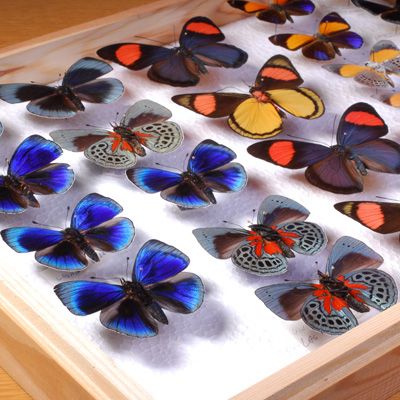
Online live sessions (synchronous) on the 21st, 23rd, 25th, 28th, 30th of March and 1st of April, from 16:00 to 20:30 (Madrid time zone).
Live sessions will be recorded. Recordings will be shared with participants in between sessions for a limited amount of time, so they can revisit them if needed. Attendance to live sessions is required.
Course Overview
Using a combination of lectures, discussions, demonstrations, and readings, this course will teach participants how to better care for and manage all natural history collections (including botany, geosciences, and zoology).
The importance of the collections storage environment is emphasized, as well as the identification and selection of inert materials, testing locally available materials, adapting collections care standards to particular environmental conditions, and good management through sound policies and collection planning.
Rather than the traditional discipline-based approach, the course teaches collections care based on collection material and preparation type―dry preparations, wet preparations, and documentation (including paper-based and electronic media).
The course will benefit individuals who already have experience in caring for natural history collections, as well as those who intend to work with natural history collections.
Participants must have a personal computer (Windows, Mac, Linux). The use of a webcam and headphones is strongly recommended, and a good internet connection.
English
Places are limited to22 participants and will be occupied by strict registration order.
Participants who have completed the course will receive a certificate at the end of it.
Online live sessions on the 21st, 23rd, 25th, 28th, 30th of March, and 1st of April; from 16:00 to 18.00 and from 18:30 to 20:30 (Madrid time zone).
The rest of the time will be taught with pre-recorded lectures to watch asynchronously.
40 hours
This course is equivalent to 2 ECTS (European Credit Transfer System) at the Life Science Zurich Graduate School.
The recognition of ECTS by other institutions depends on each university or school.
Greg McDonald
Bureau of Land Management
United States of America
John E. Simmons
Museologica
United States of America


The Wall