Join real people.
You are not alone.
Your data stays inside.
Now it is your turn.
State of AIDS - Centring HIV in the Public Health Discourse by the Brunel University London
Details
| Date & time | Dec 1 '21, 05:00PM |
| Ends on | Dec 1 '21, 06:30PM |
| Location | Brunel University London, United Kingdom |
| Creator | fbergstrom |
| Category | lecture |
Who's attending
 Basic
Description
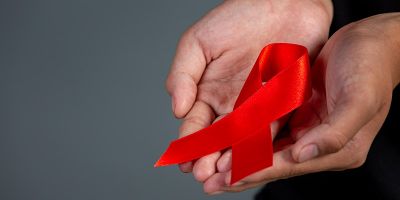
State of AIDS is an online special lecture and panel discussion on the global state of HIV and AIDS, for World Aids Day 2021
Registration website
About this event
State of AIDS aims to increase knowledge and raise
awareness around the HIV and AIDS epidemic in the global context and to
identify key areas of action for ending AIDS through global public
health research and interventions.
Commemorating World AIDS Day,
this event features experts from the UK, Africa, and the Americas.
Their presentations will spark further discussions on HIV and AIDS and
their impact on global health through the lenses of political,
psycho-social, and individual behaviour.
Featuring:
Dr Donna Royer-Powe has over twenty years of
experience in the clinical management of HIV and AIDS and the provision
of psycho-social services to people living with HIV in the public and
private sectors. As Director of Medical Services at the Department of
Corrections (Jamaica), Dr Royer-Powe oversees the delivery of health
care to approximately 4500 inmates and develops policies and guidelines
for the provision of health care in the institutions. Additionally, as a
Medical Officer withJamaica AIDS Support for Life,
Dr Royer-Powe is the lead doctor with responsibility for administering
care to persons who are enrolled on Pre-exposure Prophylaxis (PrEP) and
provides care to people living with HIV. This includes medical checks,
treatment of HIV, STIs and the provision of key psychosocial-social
services.
Krishen Samuel is from South
Africa originally. He is currently completing his PhD in Public Health
at the University of Arkansas on a Fulbright scholarship. He received a
master’s degree in Global Public Health and Policy from Queen Mary,
University of London in 2017. Scholarly and research interests lie in
the social determinants of health, particularly in relation to HIV. He
is also involved in substance use and mental health research. Krishen
has been living with HIV for over a decade and has engaged in
international activism for the inclusion of people living with HIV and
stigma reduction efforts. He has spoken at the British Parliament,
Harvard University and been featured on the BBC in this role.
Dr. Shanti Singh-Anthony, MD, MPH. Graduated with her medical degree in 1992 and public health degree in 2004. Worked extensively in Guyana Health Care System- hospital and primary health care. Served as the Guyana National HIV programme manager for 12 years and currently leads HIV knowledge management efforts for the Pan Caribbean Partnership Against HIV and AIDS (PANCAP).
World AIDS Day takes place on 1 December each year. It’s an opportunity for people worldwide to unite in the fight against HIV, to show support for people living with HIV, and to commemorate those who have died from an AIDS-related illness. Founded in 1988, World AIDS Day was the first ever global health day.
Over 105,200 people are living with HIV in the UK. Globally, there are an estimated 38 million people who have the virus. Despite the virus only being identified in 1984, more than 35 million people have died of HIV or AIDS related illnesses, making it one of the most destructive pandemics in history.
Today, scientific advances have been made in HIV treatment, there are laws to protect people living with HIV and we understand so much more about the condition. Despite this, each year in the UK over 4,139 people are diagnosed with HIV, people do not know the facts about how to protect themselves and others, and stigma and discrimination remain a reality for many people living with the condition.
World AIDS Day is important because it reminds the public and government that HIV has not gone away – there is still a vital need to raise money, increase awareness, fight prejudice and improve education.


The Wall