Join real people.
You are not alone.
Your data stays inside.
Now it is your turn.
ICM Seminar Series #4 Multi modal data integration
Details
| Date & time | Mar 8 '22, 01:30PM |
| Ends on | Mar 8 '22, 02:30PM |
| Location | Cambridge University C.C., United Kingdom |
| Creator | LouiseLHarris |
| Category | seminar |
| Registration | Link |
Who's attending
 Basic
Description
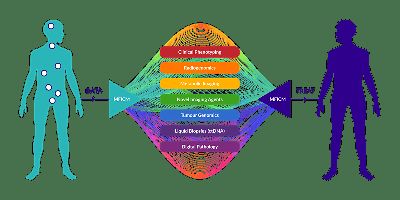
The ICM Seminar Series brings together a network of international and Cambridge based experts in all aspects of integrated cancer medicine.
About this event
This series comprises speakers who work within the area of integrated cancer medicine both in the research space and in the clinical space. Talks will be 15-30 minutes in length with time for Q&A afterwards on zoom. We want to target a broad audience who are interested in how integrating patient data can lead to revolutionising cancer care by re-inventing their treatment pathway.
ICM Seminar Series #4 - Multi-modal Data Integration in Oncology
In the fourth seminar of the series on International Women's day, hosted by Ellie Wolmark from the CRUK Cambridge Centre, Dr Mireia Crispin-Ortuzar, University Lecturer in Integrated Cancer Medicine, Department of Oncology, University of Cambridge will talk about The Challenges of Multi-modal Data Integrationand Fiona Ginty, Biosciences Technology Manager and Principal Investigator, GE Research Centre, Niskayuna New York will talk about Multi-modal Data and Elucidating Tumor Heterogeneity .
The Challenges of Multi-modal Data Integration
Treatment decisions in oncology are typically made in so-called multi-disciplinary meetings in which data and observations are collated with the aim to optimise patient journeys. With the development of digital techniques in the last few decades, the amount of data available has grown exponentially, but the way decisions are made remains mostly unchanged. Even though data integration efforts have grown exponentially in recent years, bringing together data streams as disparate as radiological imaging and genomics (what is known as radiogenomics) remains challenging. In this talk I will briefly discuss the radiogenomic literature, present the three main types of challenges that we face (scale, complexity, and implementation), and discuss some of our recent work on technologies for multi-scale radiogenomic data registration and modelling.
Dr Mireia Crispin-Ortuzar
Dr Mireia Crispin is Assistant Professor in the Department of Oncology of the University of Cambridge, and her lab focuses on the development of data integration models to understand response to cancer therapies. She is also a member of the executive committee of the Mark Foundation Institute for Integrated Cancer Medicine at Cambridge, and the Chief Digital Officer of 52North Health, a biotech start-up developing affordable at-home tests for cancer patients. She previously worked at Memorial Sloan Kettering Cancer Center in New York, and was the Director of the Healthcare Innovation programme of the Center for the Governance of Change at IE University (Madrid, Spain), focusing on policy challenges for the integration of AI and digital health in European healthcare. A particle physicist by training, she did her PhD at the University of Oxford and the Large Hadron Collider at CERN.
Multi-modal Data and Elucidating Tumor Heterogeneity
The
field of “spatial omics” has exploded in the last few years and single
cell transcriptome and protein multiplexing techniques are providing
fascinating new mechanistic insights into cellular behaviors and
interactions in context of the tumor and surrounding microenvironment. I
will present our work on multiplexing and spatial cell analysis in
colorectal cancer and glioma, focusing on characterization of immune
response, cell phenotypes, heterogeneity analysis. As this exciting
field grows, new approaches will be needed for more seamless multi-modal
data integration, visualization, interpretation, and standardization.
Dr Fiona Ginty
As Biosciences Technology Manager at General Electric Research Center, Fiona leads a group of scientists who are inventing new applications in cellular and molecular biology including vaccines, forensics, applications of synthetic biology, and diagnostics. Over the last decade, she has also led the multidisciplinary team who developed a highly multiplexed fluorescence imaging and single cell spatial analysis platform (Cell DIVE™). This technology is now playing a growing role in the new field of “spatial omics”, providing insights into tumor spatial biology, heterogeneity and immune response. She is a Principal Investigator on three awards from the US National Institute of Health (NIH), investigating systems modeling of cellular apoptosis and heterogeneity in colorectal cancer, immune response in DCIS in different ethnic groups, as well as a PI on the NIH Human BioMolecular Atlas Program (HuBMAP) focusing on building a 3D atlas of human skin and skin cells. Earlier in her career, Fiona led research on bone development and metabolism at the Medical Research Council, Cambridge UK and before that at the Nestle Research Center, Switzerland. She has a B.S. Microbiology from National University of Ireland, Galway and Ph.D. in Nutritional Science from University College Cork, Ireland and has 48 peer-reviewed publications and 13 patents.


The Wall